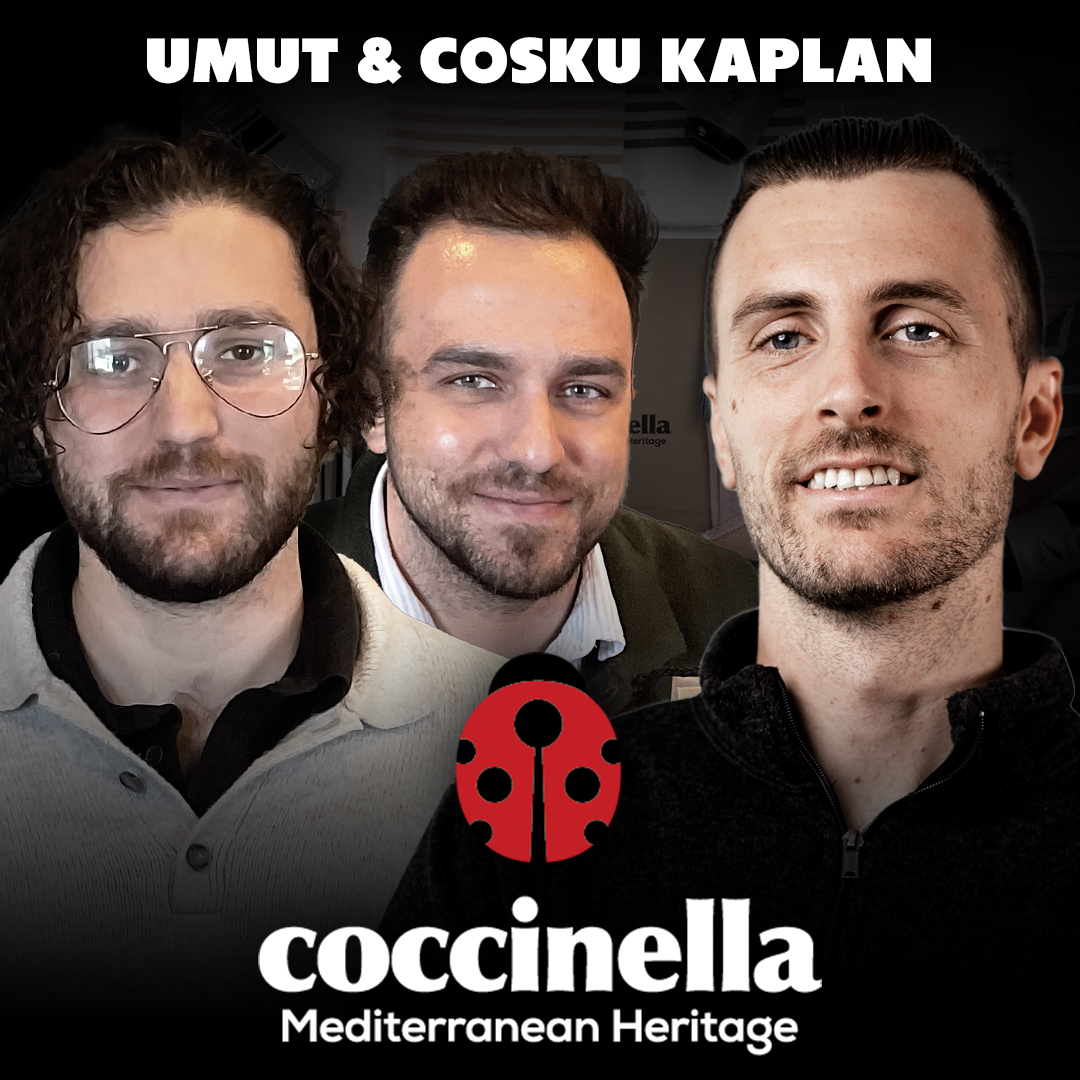
Umut and Cosku Kaplan, and their parents, are the owners of Coccinella, a family business which sells olive oil & textiles online, and at their storefront in Edina.
From Turkey, Umut and Cosku grew up in the capital city of Ankara, which is home to nearly six million people.
Despite being the capital, Ankara often doesn’t receive the same level of attention as Istanbul, a bustling metropolis that is located near water, and one that is constantly busy due to its tourist attractions.
“In Ankara, we always wish that we had water access,” jokes Umut.
What Ankara may lack in notoriety, it more than makes up for in hospitality and history.
“Strong family ties too,” Umut says.
”That’s a cultural thing.”

In the Kaplan’s hometown, winters can be dreary, and just like in Minnesota, residents are prone to staying indoors when the temperatures drop too low.
“We actually get more snow than here,” Cosku claims, but having grown up in Minnesota, I’m inclined to believe that nowhere, outside of rural Canada, can be colder than the Land of 10,000 Lakes.
The Kaplans may beg to differ.
“Even in the summer, we always tell people to bring a coat because the night breeze can get you sick,” shares Umut, not exactly convincing me to call Delta and book a trip out east.
That being said, Umut and Cosku could very well still be in Turkey today, had it not been for a foreign exchange student from Italy who completely revolutionized the Kaplan’s perspective when he joined their household for one year.
“Having him become part of our family was awesome. He immersed himself in our culture and broadened his worldview,” Umut recalls.
“He even became fluent in Turkish.”
While having an Italian in their domicile was rewarding in so many ways, it was also motivating, to the extent that the Kaplan parents decided to enroll their boys in a boarding school, in New Hampshire of all places.
“We came to the United States for education and language purposes,” Umut says.
“Keep in mind, I didn’t speak any English at that time,” Cosku adds. ”So I basically learned how babies learn, by listening to it every day.”
Becoming fluent in English was an obvious challenge, but more crucially, the Kaplan brothers were in a strange locale, far away from any cultural comforts from back home.
Others may have folded, phoned home like ET, and begged their parents to fly them back.
“We were way out of our comfort zone,” Umut admits.
“When you really think about it, we were forced into it, but that was a good thing,” Cosku says.
“If we had gone to a big city, we would have just been a number, and we likely would have retreated into our comfort zone by finding Turkish people already living in New York or Los Angeles, and simply befriended them in order to make our everyday lives easier.”
But they didn’t do that, and perhaps without knowing it, the Kaplans laid the foundation for entrepreneurial success, inadvertently teaching themselves the value of persistence and resiliency.
When it came time to move on from boarding school, Umut, the older brother, chose to attend Michigan State.
Two years later, Cosku followed his brother to East Lansing.
“That was a big campus though. Sometimes it took forty minutes just to get to class, so I wanted to go somewhere more like New Hampshire, a place that could offer a more personal and close-knit environment,” Cosku says.
“After applying to universities in nine different states and Canada, that’s how we ended up in Minnesota.”
That explains why I’m sitting in Coccinella on a Friday afternoon in March, snow on the ground, but spring only a few footsteps away.
At the same time, Umut and Cosku didn’t grow up as olive oil aficionados.
There is no secret family recipe, but it should be noted that in Turkey, olive oil is a popular ingredient, both for its taste, and also its health benefits.
“Olive oil is the essence of a balanced Mediterranean diet,” Umut states, and early on in their time in America, the Kaplans couldn’t find any Turkish olive oil, even though the country is widely acknowledged as the place of origin for olive oil.
Says Cosku:
“I remember when we first got to New Hampshire, we were in the cafeteria, and we were preparing a salad. I quickly noticed that there was a lot of French or ranch dressing. That was one of our first cultural shocks. We didn’t know those dressings and never thought about using anything other than olive oil.”
This experience taught them something, and later on, Umut and Cosku, along with their parents (who are the true visionaries of the business), thought they could bring quality olive oil to a country severely lacking in healthy ingredients, and culinary variety on a global scale.
Hence, the advent of Coccinella.
“The largest consumer market in the world [United States] doesn’t know about Turkish olive oil,” Umut says.
“I find that to be odd.”
For context, in the United States, the average person will consume one liter of olive oil every year.
“But in Turkey, that number is double, and in Italy, that number is 20 times as much,” Umut reveals.
“Olive oil simply isn’t very popular in American culture, and although it’s become exponentially more popular in recent years, it still isn’t on the level as some Mediterranean countries.”
Yes, there is a gap in the American olive oil market.
Admittedly, I didn’t even know Turkish olive oil was a thing until I met Umut and Cosku, but it quickly becomes apparent that the brothers aren’t just selling a product that they like to consume.
Rather, they are selling an everyday staple for native Turks, simultaneously exposing Americans to a product that tastes amazing and carries significant health benefits, like anti-inflammatories, improved bone density, and increased cardiovascular health, according to a simple Google search.
At the same time, running an olive oil business is an endeavor that isn’t for those seeking instant gratification.
“This business, it’s not always easy,” says Umut, who sources his olive oil directly from Turkey, ensuring only the highest quality ingredients go into each and every bottle they sell.
“There is a lot of stress and anxiety that comes with having a family business, but you power through it because there’s nothing else I would rather be doing than working with my brother every day and following our dream.”
Moreover, creating their olive oil recipe involved repeated trips back home to find a producer who equaled their level of passion and attention to detail.
“There are over 350 factories that produce olive oil in Turkey, but about 40 of them follow the complex processes that are required to produce true high-quality olive oil,” Umut notes.
“That’s why we say—just because a product comes from a country known for it doesn’t automatically mean it’s high quality. The soil and origin do matter, but the process plays an even bigger role in determining the final quality.”
In that sense, the spaghetti from Italy may not necessarily be top-notch, nor are those coffee beans sourced from Colombia automatically guaranteed to be the country’s premier ingredients, which is why Umut and Cosku were diligent before they ended up partnering with a company in Aydin, located in the southwest region of the country.
“We know how the family cares about the olive oil production process,” Umut ensures me, and indirectly, you.
“We work hand in hand with a family who shares our values. Together, we oversee every step with care, making sure nothing is overlooked, so the final product reflects our shared commitment to quality.”
At present, Oleavia (name of olive oil) is available across the Twin Cities at Kowalski’s, Surdyk’s, and several other stores, plus at their Edina storefront and online.
For reference, their bottles range in price from $24-30, which is higher than what consumers would pay if they bought one of their competitors plastic bottles, but arguably much more expertly crafted.
“Due to our meticulous, detail-oriented process, every step matters — from the location of our olive groves, including leaf and soil analysis, to exactly when and how the olives are picked. After harvesting, we ensure they’re pressed as quickly as possible, with close attention to how they are pressed, stored, bottled, and shipped. With our final product, we can confidently say we offer one of the finest olive oils you’ll find,” Umut explains.
“Each stage is thoughtfully executed to preserve high levels of healthy antioxidants and create a beautiful harmony in taste.”
Still, Umut and Cosku recognize that not everyone cares about olive oil as much as they do, but based on the success of Coccinella, it’s evident that every day, more and more people are becoming more conscious about the type of products they buy for their families.
“If you’re someone who cares about what goes into your body and values both flavor and health, our extra virgin olive oils were made with you in mind. They bring depth to your dishes, harmony to your palate, and most importantly, the health benefits that true olive oil is meant to offer,” Umut says.
Adds Cosku:
“It’s important to remember that a bottle label can’t capture the whole process behind an olive oil production. There are certain key points that can help you identify whether you’re choosing at least a decent one, but heavily marketed terminology can make it challenging to truly understand the quality just by looking at the bottle. That’s why we always recommend learning about the brand and paying attention to how transparent they are when choosing a go-to olive oil brand.”
“Many people may continue to see olive oil as just a commodity, and that’s okay. However, we believe it is our responsibility to share important information with everyone so that they can make an educated decision for themselves.”
Looking ahead, Umut and Cosku plan on being intentional about further marketing and disseminating their message, and putting outstanding olive oil on more dinner tables, both in the Twin Cities, and beyond.
“That will be important in growing our footprint, and informing more people about our olive oil, and how it can positively impact their life,” Umut insists.
“The key to all this is as people learn why we are different, they will learn about our story, and how we are transparent in our production process. That’s ultimately where we will make inroads.”
Adds Umut, punctuating our interview with utter sincerity:
“People already say they can taste the difference when they try our product. That’s why the goal is to show as many people as possible just how special and unique our olive oil is. From there, that’s where organic growth will occur.” QS
**
Today’s post is sponsored by Tiffany Daly of WIIN Insurance Agency!
On the personal side, Tiffany writes policies for home, auto, and umbrella insurance.
For commercial insurance, WIIN writes policies for general liability, worker’s comp, commercial auto, umbrella, and cybersecurity.
Tiffany and WIIN are currently licensed in six states, including: Minnesota, Wisconsin, Florida, Arizona, North Dakota, and Oklahoma.
To receive your free insurance estimate, call Tiffany today at (612)505-3329!
 quentinsuper.com
Leave a comment