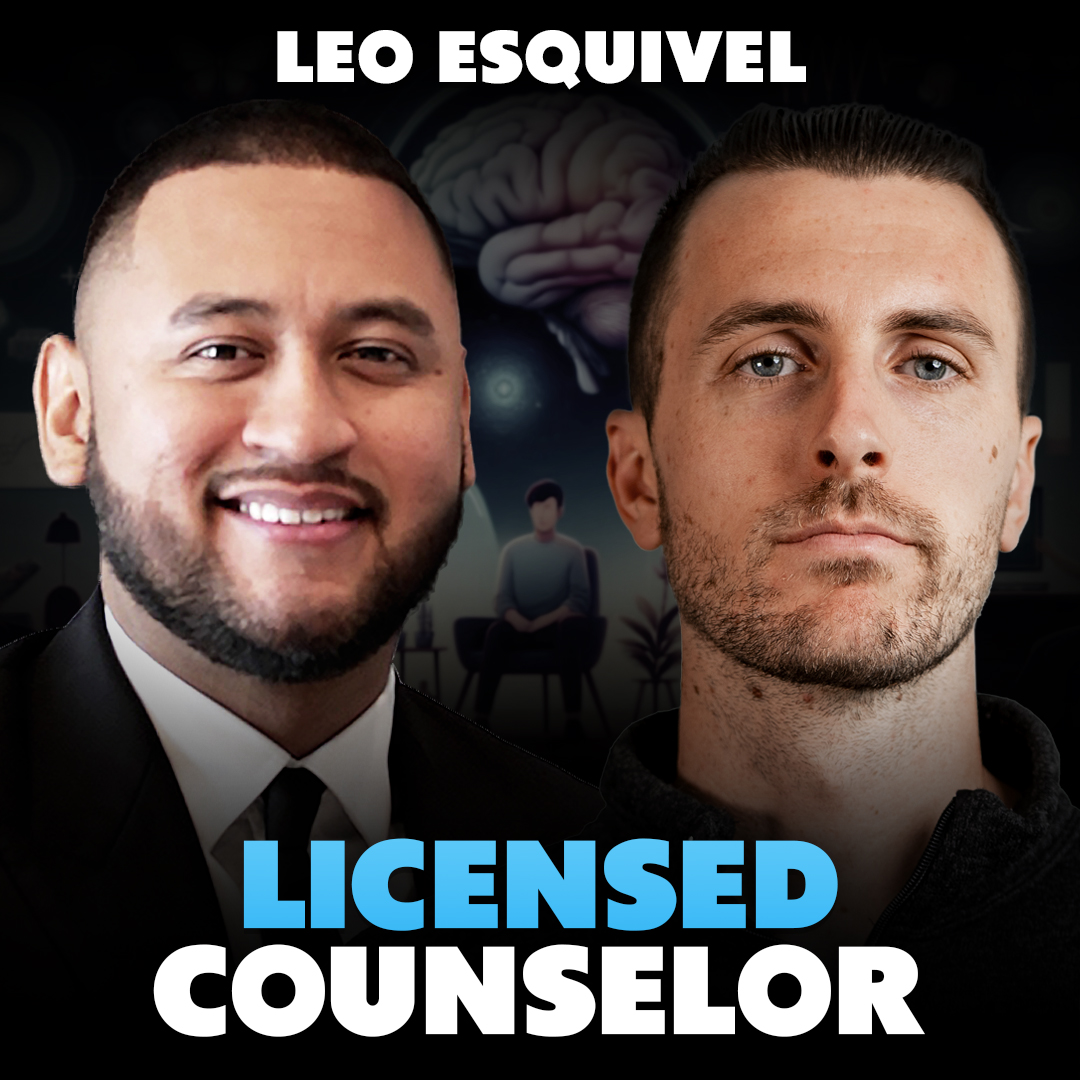
Leo Esquivel is a licensed counselor.
Well, almost.
He’s currently in the midst of completing a 3,000-hour internship.
“I’m about 2,000 hours in,” says Esquivel, a resident of the Rio Grande Valley, where he has been living for the last two-plus decades.
Come October 2025, Esquivel will have completed his internship.
“At that point, I will be fully licensed and bringing on clientele for my private practice,” he notes.

In the interim, Esquivel will continue to focus on mental health work inside and outside the confines of licensed work, which in essence is the same as traditional counseling, sometimes minus the official credentials Esquivel will soon receive from the state of Texas.
“With the upcoming mental health work, my goal is to bring awareness to common mental health challenges and be a resource for people who are struggling,” says Esquivel, who to broaden his reach has also started to upload content onto YouTube.
“I want to put my knowledge out there, and the best way to do that is to share a lot of key information with as many people as possible. A platform like YouTube allows me to do that more effectively.”
As we talk, it’s clear Esquivel wants to build a brand and make his name become synonymous with the service of others.
To do that, he will have to continue marketing himself to the masses, but it should be noted that Esquivel is not doing this strictly to generate more income.
A special ed teacher and real estate investor, the 36-year-old Esquivel is already an established young professional, but like so many great individuals, his ambitions extend beyond the financial rewards that come with consistently adding value.
Rather, Esquivel wants to make an impact on the Rio Grande Valley and beyond by serving as a counselor, and he isn’t interested in charging top-dollar to those in need.
“Sometimes what happens is people neglect their mental health because of the costs associated with it,” Esquivel points out.
“Of course, especially as my practice evolves, I will have to make money to pay my bills, but I don’t want to charge more than I have to, meaning I do believe there is a fair number that I can charge for my time and services, and that the majority of the population can afford.”
Adds the cerebral and empathetic Esquivel, humility at the forefront of this endeavor:
“For the people who genuinely need help with their mental health, I don’t believe they should have to decide whether to address that or not pay a major bill.”
As a licensed practitioner, Esquivel is held to a certain standard by the governing bodies who oversee mental health counselors.
This oversight keeps counselors accountable, and for professionals like Esquivel, it also is a constant reminder of the need to prioritize clients over profits, which helps explain why Esquivel is so intent on serving first, and potentially profiting later.
“I am genuinely interested in offering quality versus quantity,” Esquivel says.
“Even if I only have ten clients per month, I want to make sure those clients are getting the best possible treatment, and that I’m approaching our dynamic as a counselor versus a businessman.”
Again, Esquivel, who has already been doing mental work for several years, is not pursuing acclaim.
He’s simply doing the work and letting the general public determine his monetary value.
“I can’t charge a premium for my services if I’m not a high-level counselor,” the RGV local acknowledges.
“And I’m not in a rush to get to the point where I’m charging people $200 per hour. If anything, I want to provide so much value and have so many people wanting to work with me that I’ll simply have to charge that much in order to maintain a sustainable work-life balance.”
2,000 hours in, and with thousands more on the horizon, the modest Esquivel doesn’t proclaim to perform miracles, but he is confident in his abilities to assist patients with their mental health needs.
“There are no guarantees in life, and there are no guarantees that therapy will radically alter someone’s life, but I’m very confident that if someone comes to me and is willing to put in the work to improve, that I can give them the insights and the tools required in order to be successful on their own,” Esquivel outlines.
Those last three words are crucial.
For his part, Esquivel wants his patients to succeed, without his direct care, meaning the aim is to treat his patients in a way that allows them to be more self-sufficient when it comes to their mental health.
In other words, he is outfitting his patients with the tools and strategies they need in order to live productive and fulfilling lives.
It helps that Esquivel is a fluent Spanish speaker, particularly in the RGV, which is situated just minutes from the U.S.-Mexico border and rich in Latino culture and customs.
As discussed two years ago when Esquivel first appeared on this platform, the topic of mental health is considered by many to be taboo among Hispanics, especially among men, who from a young age learn to stifle their emotions and internalize whatever issues are concerning them.
“Masculinity and mental health can sometimes operate in direct competition with each other,” says Esquivel, who wants to destigmatize mental health in his community, without compromising on the core tenets of Latino culture.
“I can be an advocate for minority communities that have more traditional values because while there is a lot of good that comes from abiding by traditional norms, the reality is that the mental health component of that traditionalism hasn’t evolved to where, men especially, can feel comfortable being vulnerable and going to a professional for support.”
As with anything mental health-related, there are no easy answers, otherwise professionals like Esquivel likely wouldn’t exist.
To enter counseling can be tough, and to get through it armed with clarity is arguably even more challenging.
This is where Esquivel wants to reiterate that overcoming mental health struggles requires dedication and sacrifice, because although Esquivel is a certified expert, he can’t snap his fingers and remedy any issue.
Instead, he can foster an environment that encourages collaboration and the collective pursuit of an end goal.
“My approach isn’t dictatorial. I’m not telling you what to do and then asking you to follow without any input,” Esquivel emphasizes.
“Rather, we’re working together to develop a personalized plan that caters to your strengths, while also accounting for your weaknesses in a way that will challenge you, and ultimately be conducive to your long-term well-being.”
This is why it is so imperative that someone seeking mental health solutions hires a licensed professional versus a “coach” or an individual without bona fide certifications, because licensed pros have the skills and intimate knowledge to accurately assess the underlying cause of their clients’ struggles.
“All my work is research-based because I have intensely studied the subject,” Esquivel says.
“How I guide my clients isn’t based on my opinions. It’s rooted in years of case study and scientific literature.”
For example, an unlicensed coach parading around the internet as a mental health guru would likely prescribe aspirin for a headache.
That alone might seem sufficient, but a licensed mental health professional like Esquivel has the skills and training to discover why your headache keeps recurring, and what you can do to prevent the agony from returning.
“A coach may be able to talk you through something, but they can never truly heal you, mostly because they just don’t know how,” Esquivel says.
Looking ahead, the magnanimous Esquivel will remain committed to creating more free online content and establishing himself as a reputable counselor, so long as the aspirations of the former never interfere with the daily work of the latter.
“YouTube will always be a really good way to touch on the mental health issues that are prevalent in society,” Esquivel says.
“I’m grateful that the platform allows me to help people on the front end, without any initial investment on the part of the clients. Hopefully over time, if the clients continue to receive value from my content, they will want to work with me in a 1:1 setting.”
Adds Esquivel:
“That being said, the main motivation with all this is to help people live more fulfilling lives, and I’m excited about how this is already evolving.” QS
**
As a family-owned business with 53 years of experience in the Twin Cities market, Grussing Roofing specializes in residential roofing, insurance restoration, siding, windows, and gutters.
For homeowners and commercial building owners who are looking to connect with a company that prides themselves on putting customers first, look no further than Eden Prairie-based Grussing Roofing.
 quentinsuper.com
Leave a comment